


Key Takeaways
- ERP and CRM integrations for international marketplace platforms ensure you always have accurate and up-to-date data.
- Multilingual and multicurrency capabilities are essential to reduce shopping cart abandonment and keep customers coming back.
- With international marketplaces, you'll need to tailor your marketing content to each region and do your research to know what's popular in each area.
Why Expand to an International eCommerce Platform?
International marketplaces present an opportunity for eCommerce businesses to scale and increase brand awareness. For B2B eCommerce development, global markets increasingly favor specialty platforms.
Companies can design their own international marketplace platforms or sell on other platforms to extend their marketing reach. These methods offer valuable opportunities to increase sales, improve international marketing methods, and generate leads and commission.
What ERP and CRM Integrations Give International eCommerce Platforms
With back-end integrations such as with your ERP, CRM, and even CMS to your eCommerce store, you have a lot more functionality with your marketplace platform and a better user experience.
Integrated eCommerce gives you real-time updates to and from your back-end and front-end software, keeping everything accurate and up to date. ERP and CRM integrations for international marketplaces allow you to achieve each of the following factors that we'll go over. In other words, an integrated marketplace platform allows you to be successful in international marketplaces.
How to Be Successful with an International Online Store
A large part of how successful your global business is in an international market stems from how well your business handles the challenges and nuances of the international marketplace. Successful companies adjust their marketing techniques for audiences of varying interests, nationalities, and purchasing habits. Some of the most important areas of navigating an international market include:
- Managing complex inventory
- Region-specific and interest-based marketing strategies
- Multilingual capabilities for your website
- Web store connectors
- Automated processes
Having workflows that allow these operations to run smoothly will help generate customer loyalty, build trust, and facilitate conversions.
Pro Strategies for International Marketplaces
- It's advantageous to work with your vendors and enable them to keep their own warehouses and shipping providers. This reduces your costs of storing, shipping, and manufacturing products.
- Focusing on a niche market will allow your business to dominate that niche and expand from there.
- Marketplace platforms provide multiple product lines and services on one website, but they can also have subdomains, or be a multistore platform.
- Multistore platforms can tailor content to different customers and therefore are especially useful for operating an international marketplace platform.
What You Need to Build a World-Wide Marketplace
Strategic infrastructure is one of the most important criteria for successfully building an international marketplace platform. It's not as simple as allowing others to display products on the company's website or offering to ship products internationally. There can be language and cultural barriers, tax codes and compliance issues, possible price wars on marketplace platforms among vendors, and other issues.
To manage these challenges and take your international eCommerce business to the next level, you need a customizable marketplace eCommerce platform that caters to your needs. A SaaS-based, off-the-shelf eCommerce product will often not be enough to get the job done, especially as the business scales. Here are some pro tips for successfully building and managing the best international marketplace solution.
Multilingual Support
Maintaining customer engagement is a top priority for creating better customer experiences and interactions with your platform. Multilanguage support is critical for this in international marketplaces. For best results, your software infrastructure has to support and manage this feature seamlessly.
Website content, including articles and blogs, white papers, product descriptions, instructions, image labels, icons, and more, needs to comply with local languages and presentation styles to engage customers. Simply translating existing copy isn't enough; it's vital to create appealing content based on local tastes, social media trends, and content requirements of the targeted buyer profile. This is made possible through a multilingual integrated online store or multilingual eCommerce solution.
Shopping Carts That Accept Multiple Currencies
One of the most important things you can do to ensure success in eCommerce is to make things as convenient as possible for your customers. For international eCommerce marketplaces, automatic currency conversion, or multi-currency eCommerce, on the platform is a must. Customers don't want to calculate everything from one currency to another while trying to shop online. They should be able to focus on choosing which item they want while intuitively understanding how much everything costs. And in fact, customers are more likely to abandon their cart if the cost isn't shown in their relative currency.
Multicurrency capabilities are achievable with a multicurrency-integrated eCommerce solution, which enables you to include a multicurrency module to integrate live exchange rates, automatic displays of prices in the appropriate currency, and real-time updates that display the right price at all times.
Pro Tip: Remove Barriers
Removing barriers or obstacles that can get in your customers' ways are key to increasing conversions and decreasing cart abandonment. If your site is inconvenient or difficult to use, customers won't use it.
Local Competition
It's critical to offer customers something more than just a better price to convince those in foreign jurisdictions or regions to buy products from your marketplace when acceptable local products are available, or you need to have niche or unique items that can't be found in local stores.
Your website infrastructure needs to provide a superior experience for researching products, finding specialty items, and providing shipping options with a seamless self-service ordering process. With international marketing, it's vital to research each aspect of marketing and providing products to different areas, including whether to use local suppliers and how to adapt products to local preferences.
Multivendor Platforms
Another way to go about this is to allow local vendors to sell their products through your multivendor marketplace platform. If you have a multivendor and multistore platform, local sellers could have an online store within your marketplace that's tailored to their particular audience within that region or area.
There are several advantages to multivendor and multistore eCommerce for international marketplaces. Keep in mind, though, that you'll still need to provide a high-quality experience on your international online store, which means having guidelines and rules for how vendors conduct themselves and list products on the site. Guidelines for uploading product data are important so that data is standardized—this allows customers to compare items easily and for data to update accurately in real time to and from your integrated ERP and CRM.
Here are the advantages to multivendor and multistore eCommerce for international marketplaces:
- Having more sellers on the platform means more buyers, which means more sales and spreading global brand awareness.
- Local vendors may be preferred by some if they're available on the platform, and you'd be giving those customers the option to purchase from them.
- There are logistical advantages to having local vendors and/or shipping partners, as their physical proximity helps keep shipping costs down.
- It can help in dealing with customs, duties, and taxes to have something shipped from a location where the provider has to drop shipping capabilities in.
Multiple Payment Options
Besides having multiple currencies available through a multicurrency eCommerce integration, you'll need to have several payment methods for online shoppers to choose from. It's critical to research each country or region and support the most popular payment methods and providers in each area.
Different countries can have different ways of making payments, even if they share the same currency [3]. Partnering with a payment-gateway company with multiple connections increases the options for rerouting payments through multiple gateways. Clarity's Payment Hub solution gives international marketplaces an edge because it breaks through the limitations of other payment gateways and point-of-sale systems.
Region-Specific Content
There are multiple options for providing region-specific content when the company's platform has a robust API layer and integrated software. Possible approaches include designing several proprietary designs for each global store. Designers can add banners to target buyers from key areas, and displays can be adjusted for the images, text, and layouts that cater to those buyers' specific expectations and needs. Even the placement of text and images, etc., on the page, can be adjusted from left to right or right to left, depending on the reading direction of buyers' languages.
Adding Foreign Domains
A good proactive strategy for protecting sales and key terms used in website searches is registering international domains. It's important to register popular, top-level domains such as those using “.com” and other locations. Country-specific domains, such as co.uk, .fr, and .ca also provide a better integrated eCommerce solution for SEO ranking and optimization of keywords for each locale.
Regulatory Requirements
Regulatory requirements are constantly evolving, and international marketplaces have to keep on top of them to avoid compliance issues. That's why automated monitoring and real-time updates are so important when operating a worldwide marketplace platform. For example, it might be required that each customer reads policy information or compliance issues could be more challenging such as meeting HIPAA guidelines for health-monitoring products.
International Marketplace Challenges

- Overseeing internal price-competition issues
- Ensuring high quality among vendors
- Embedding multiple payment solutions and multicurrency support
- Determining options for shipping
- Troubleshooting accountability issues
- Creating multilingual marketing and content-creation strategies
- Automating content and Web displays based on geolocation, language, and regionalisms
A telling example of the effectiveness of providing native-language content is shown by a study that found 60 percent of consumers in non-English-speaking countries rarely or never buy from English-only websites [4]. The right software that's fully integrated into the best eCommerce platform can make handling these challenges easy and efficient.
Choosing Your Partner for Your Global Online Store
In today's competitive eCommerce international marketplaces, it's important for eCommerce companies to develop, upgrade, and integrate their software continuously. New decisions are constantly needed, and ongoing monitoring and adjusting come with the territory.
That's why you need a team of experienced eCommerce platform engineers who can create a marketplace website and ensure platform security, consistency, scalability, and maintainability. Cultivate a long-term relationship with an eCommerce platform vendor you can trust to build and manage your international marketplace platform while minimizing costs and optimizing sales and marketing tools.
Sources: summalinguae.com, info.mirakl.com, weglot.com, icmi.com.
Succeed in International Marketplaces
With years of building custom international eCommerce platforms, Clarity can be that partner for you. We'll deliver a multilingual eCommerce website that is user friendly, accessible, supports multicurrency product pricing and shopping cart checkout, and performs many other features. We offer a free discovery session to go over your business needs and find out what solutions will work best for you. Get in touch to discover your international marketplace solution today.
FAQ
How do you build a successful international marketplace website?
Strategic infrastructure (selecting the right platform and hosting infrastructure) ranks as the single most important criterion in successfully building an international marketplace platform. It’s not as simple as allowing others to display products on the company’s website, opening their own global stores, or offering to ship products internationally. There are language and cultural barriers, tax codes and compliance issues, possible price wars on marketplace platforms among vendors, and other issues.
What is the best online marketplace international?
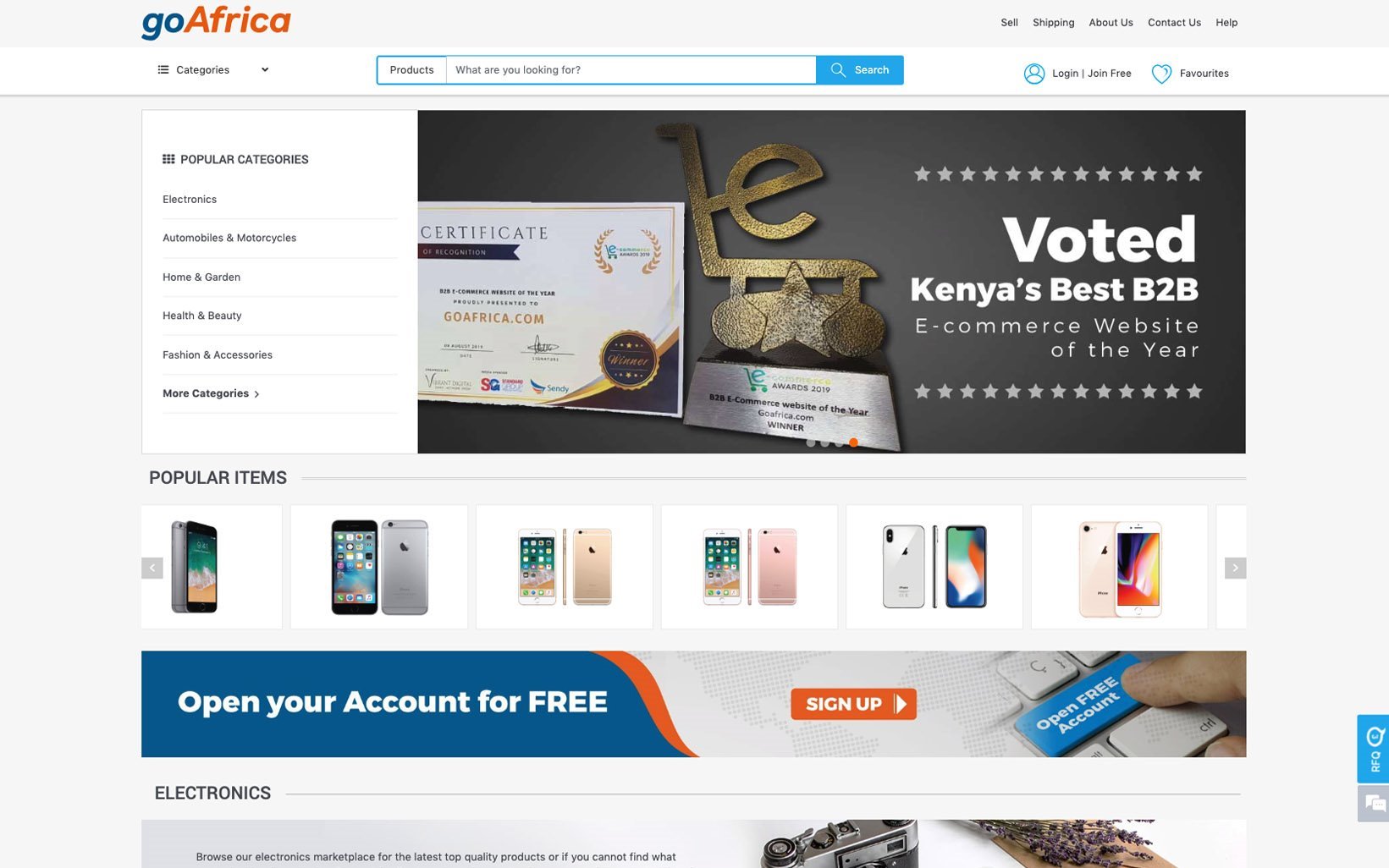
There are a lot of big and successful marketplaces. Alibaba.com, eBay.com, Amazon.com, goAfrica.com, Etsy.com, and Craigslist.org are just a few of the most popular. There are very few platforms that can scale to what’s needed for an implementation like those. Clarity eCommerce is used for goAfrica.com, and we have clients with very large SKU counts in their marketplace.
Many of the ones listed above aren’t “purchased platforms” but custom-built, in-house platforms that cost them a great deal to build. They’ve even written books about how they architected and built their platforms. Clarity has launched international marketplaces for clients at a much cheaper cost and with the integrations and capabilities an international platform demands.
What is a marketplace business model?
A marketplace business model refers to many vendors selling on a single online platform to many buyers. There are B2B, B2C, and D2C marketplace platforms, which can be domestic or international. For example, eBay is a C2C and B2C platform that sells internationally. Amazon is also an international marketplace platform. A marketplace business model allows sellers to upload and sell products to consumers through the marketplace platform, which means they can get their products in front of many potential buyers.
International eCommerce platforms using the marketplace business model provide the benefits of additional exposure for sellers' products and the easier route of not having to build and manage their own online platforms, but it also usually means having to give up a percentage of each transaction (or give some other form of payment, like a subscription) to the marketplace platform owner.
What are the most important things for an international marketplace platform?
For international marketplaces, making sure the platform or website has the necessary capabilities is essential. Without the ability to customize marketing and presentation styles for different global customers, your audience won’t be engaged in your marketplace platform. If you don’t have multilingual and multicurrency software, then your customer base will remain limited. There are many facets to consider for an international marketplace, so it’s best to work with an experienced partner for developing your platform.
References:
[[1] Mirakl: Retailers Must Seize the Marketplace Opportunity](https://info.mirakl.com/search-marketplace-software-forrester-tlp)
[[2] Icmi.com: The Growing Need For Multilanguage Customer Support](https://www.icmi.com/resources/research/2014-multilanguage-customer-support)
[[3] Weglot.com: International ecommerce: 35 ways to increase your conversion rate](https://weglot.com/international-ecommerce-35-ways-increase-conversion-rate/)
[[4] Summalinguae.com: 6 Reasons Why You Need a Multilingual Marketing Strategy](http://www.summalinguae.com/localization/6-reasons-why-you-need-a-multilingual-marketing-strategy/)
Still have questions? Chat with us on the bottom right corner of your screen #NotARobot
Related resources
- Advanced Multilingual Capabilities & Considerations
- International eCommerce Expansion and Challenges Guide
- Best Practices for International Marketplace eCommerce
- How Multistore Platforms Support Global Marketplace
- Seizing the Opportunities of International Events
- International PCIDSS Compliance Checklist
- Optimizing Your International Mobile Performance
- B2C Marketplace Platform
- ECommerce Multi-Store
- International eCommerce Logistics
- Multi-Vendor Marketplace Platform
- International Cart and Checkout Requirements

Autumn Spriggle
Autumn Spriggle is a Content Writer at Clarity Ventures who stays up to date on the latest trends in eCommerce, software development, and related topics to provide readers with the latest and greatest. She strives to help people like you realize the full potential for their business.
Creating a World-Class Marketplace Operation
Whether your company sells on multiple marketplace channels and/or designs an international marketplace platform where other vendors sell industry-specific goods, it's important to partner with seasoned experts who can develop and integrate software solutions that are customized for your business and help you overcome the challenges that come with international marketplaces.
Work With Us