


Key Takeaways
- ACH (Automated Clearing House) payments are electronic transfers and direct payment between bank accounts within the United States.
- They enable various transactions like direct deposits, bill payments, and business-to-business transactions. ACH integration with your current business software enables secure and cost-effective transfers, making it a popular choice for businesses and individuals for recurring payments.
- ACH transfers are widely used for recurring ACH payments like subscriptions and payroll, for both ACH debit and credit transactions.
- Unlike credit card payments, ACH doesn't run through the card networks, which keeps processing fees lower. The average ACH transaction takes 1-2 business days to clear.
- The ACH network is governed by Nacha (formerly the National Automated Clearing House Association) to ensure safety and efficiency.
Ready to Make the Most of ACH?
What Is an ACH Payment, and How Does It Work?
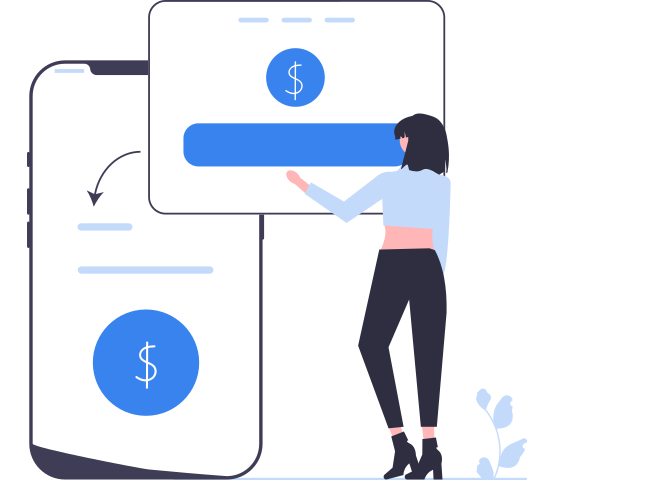
ACH stands for Automated Clearing House, which is a financial network in the United States that’s used for electronic money transfers.
ACH payments, also known as "direct payments," are a method of electronic funds transfer from one bank or checking account to another without using paper checks, credit or debit card networks, wire transfers, or cash.
Ready to take ACH from customers? See ACH payment processing with Clarity Payment Hub, which posts every ACH and eCheck payment to the invoice it settles in your ERP.
Since first being established, this type of ACH transaction has grown in usage and popularity, according to Nacha.org, there were 7.7 billion ACH transactions within the first quarter of 2023 [1].
ACH transfers are common and familiar to most consumers, even if they aren't aware of the lingo. If you pay your bills electronically (rather than writing a check or entering a credit card number) or get a direct deposit from your employer, the ACH network is likely at work.
ACH processing of transfers are increasing in popularity among businesses, too. In fact, B2B payment volume increased by 15.5 percent from the first quarter of 2021 to the first quarter of 2022. ACH payment transfers are faster and more dependable than checks, allowing them to be automated and simplify accounting [2].
In general, ACH banking transactions of transfers cost less to process than credit card payments or wire transfer. The savings may be significant if you accept recurring payments as a business. (If you still want to accept credit cards, find out how to avoid credit card processing fees.)
Differences Between ACH Payments, Wire Transfers, and EFT Payments
Wire and ACH transfers are both ways to move money between two accounts, but they have some differences.
- ACH transactions are between two financial institutions on the ACH Network, whereas wire transfers are direct point-to-point transfers.
- A wire transfer is often used for higher-end purchases while ACH processing is used for everyday things like direct deposit paychecks and ACH processing for paying bills.
- ACH transactions can be disputed within five business days for credit transfers or within 60 days for debit transfers. Wire transactions, on the other hand, can be difficult or impossible to recall or cancel once the funds have gone through.
- A wire transfer is completed in real-time (within minutes) while an ACH transfer is processed in batches several times a day. Therefore, a wire transfer can be faster than an ACH payment.
- ACH processing has more options, credit payments can be processed the same day, the next day, or in 2 days, and debit transfers can be processed same-day or next-day.
- Some payment processors charge a small fee for same-day ACH processing. A wire transfer often charges a higher rate, and they’ll charge both sides of the transaction.
- An EFT payments (EFT is a type of Electronic Funds Transfer) and an ACH transfer/transaction are both acceptable. They're both used to describe the same method of payment in the ACH system.
ACH Payments (also called EFT)
- Cost – Almost all electronic funds transfers (EFTs) are cheaper than wire transfers.
- Speed – An ACH payment can be processed on the same day, the next day, or in two days from the time payment was made.
Wire Payments
- Cost – Wire payments are relatively expensive.
- Speed – Because they do not use a “batch” technique, they are usually faster.
Examples of ACH Transactions
ACH payment transfers are divided into two categories. ACH debit transactions pull money from another account and make it available to you. ACH credit transactions let you use the ACH system to send money to other banks (either your own or to others). Here are two real-world examples of how they work.
- Direct Deposit Payroll – Many businesses now provide direct deposit payroll. They use ACH credits transactions to send money to their workers' financial institutions at set intervals using a system similar to payroll deduction.
- Recurring Bill Payments – Customers who pay a business on a regular basis (for example, their insurance provider or mortgage lender) may choose to enroll in recurring payments. This allows businesses to start ACH debits at each billing cycle, taking money directly from the customer's account.
Who's Involved in ACH Transactions?
Apart from the Automated Clearing House network (which links all the banks in the United States, often via an ACH API), there are three additional players involved with ACH debit, credit, and other transfers:
- ODFI, also known as the Originating Depository Financial Institution, is the financial institution that starts the transaction.
- RDFI, also known as the Receiving Depository Financial Institution, is the banking institution that receives the ACH request.
- Nacha (previously spelled NACHA), also known as the National Automated Clearing House Association, is a nonprofit, member-driven association (not a government agency) that governs the ACH network through the Nacha Operating Rules.
When Do You Use ACH Payments?
Let’s use your monthly automated phone bill as an example. You provide your checking account information (routing and account number) and sign a recurring payment authorization when you join up for autopay with your phone company.
After that, when it comes time to pay your bill, the phone company's bank (the ODFI) sends an ACH debit to your bank (the RDFI), and the money owed is transferred from your account.
The two banks then talk to one another to ensure there are adequate funds in your bank or checking account to complete the transaction. If the payment is approved, the ACH transfer it is sent to your phone company's account and the money is transferred.
What Are Typical ACH Payment Processing Times?
ACH credits can be processed as same-day, next-day, or 2-day payments, while ACH debits can be processed as same-day or next-day payments.
Payments are processed in batches using the ACH network. The receiving bank can hold the transferred funds for a holding period after they’ve been received. In addition, payments are only settled when the Federal Reserve’s settlement service is open.
Depending on the timeline selected for the payment processing, the procedures of the receiving bank, and the Federal Reserve settlement office hours, your transfer may be available for withdrawal within a few hours or a few days.
How Much Do ACH Payments Cost to Process?
The processing fees for each ACH transaction are usually less expensive for businesses to execute than personal transfers are. Direct deposits, in fact, usually have no fees at all since they go directly into your account from a financial institution and don’t go through a third-party payment processor.
Payment processors, or merchant account providers, are the entities that determine processing fee amounts for other types of clearing house transfers. Some ACH processors charge a fixed rate per ACH transaction. Others may charge a percentage fee for every ACH transfer.
Providers may also charge an additional monthly fee for ACH processing of transfers, which can vary significantly depending on the provider's demands.
Direct deposits and direct debit may be made with ACH payment processing in our Payment Portal.
Working out how this fits your setup?
Tell us how you take payments today and which gateway and ERP you run. We'll walk through what Payment Hub would change end-to-end, against a sandbox of your own system.
Why Are Some ACH Transfers Rejected?
If an ACH payment is denied, your bank or financial institution will issue a reject code that explains what went wrong. These refusal codes are essential for letting consumers know why their money was rejected.

The following are the four most frequently used refusal codes:
- R01 Insufficient Funds: The customer's account funds were insufficient to cover the debit entry. When you see this code, it's very probable that you'll have to repeat the transaction process after the consumer transfers money into their account or uses a different payment method.
- R02 Bank Account Closed: Customers often must call their bank and resubmit deposits. This occurs when a customer's previous account had been closed. It's probable they forgot to notify you of the modification. To process the transaction, they must provide you with a new bank account for the ACH transfer to go through.
- R03 No Bank Account / Unable to Locate Account: When an ACH transfer is processed, this code is triggered if the data supplied (the account number and name on the account) does not match bank records or if a nonexistent account number was input. The consumer will need to verify and resend their banking information.
- R29 Reject: If a bank refuses to allow a company to withdraw funds from a specific account, you'll receive this rejection code. In this situation, the customer must give their bank their ACH Originator ID so that your business can make ACH withdrawals. Then the ACH transaction must be rerun.
Are There Any Penalty Fees with ACH Rejections?
Unfortunately, a penalty fee may be incurred if an ACH payment is rejected. As a result, if you receive a reject code, it's critical to correct the problem as soon as possible to avoid paying extra for each billing cycle.
It may be worth limiting your business's acceptance of ACH payments to only those from trusted clients in order to avoid the hassles of unwinding ACH rejects.
What Is ACH Security?
The ACH network is regulated by the federal government and Nacha. These payments do not need to adhere to the same PCI compliance standards as credit card processing. Instead, and ACH transfer or transaction each has its own regulations.
To comply with Nacha regulations, all parties involved in such payments (including businesses making the payments and third-party processors) must put procedures, processes, and controls in place to safeguard sensitive data when traveling between bank accounts during an ACH transaction.
Nacha rules also state that any banking information (such as a customer's account and routing number) must be transmitted using “commercially reasonable” encryption technology.
This includes sending or receiving bank data via email or website forms, these must be encrypted, and websites need secure (https) pages. If you want to use a third party for ACH payment processing, make sure it has implemented technologies with state-of-the-art encryption technologies, like Clarity Payment Hub.
Under Nacha standards, originators of ACH payments are required to use “commercially reasonable” methods to verify the validity of client ID and routing numbers and to detect fraudulent activity.
The majority of third-party ACH processors should have these capabilities but double check before committing with anyone. It's also a good idea to work with an IT or security expert to make sure your company is sending ACH payments securely.
Make the Most of ACH
Clarity Payment Hub connects to your ERP, captures funds in real time, and automatically posts the payments to your ERP. The Payment Hub uses ACH to deposit your money into your linked bank account as quickly as possible. Transfers are grouped and deposited on a set schedule using ACH.
Benefits of ACH Payment Processing
There are a number of reasons why ACH payments are becoming increasingly popular for companies.
- Lower Processing Costs – ACH payments have some of the lowest processing costs of any payment type. If you use a flat-rate provider, ACH payments will cost your company far less out-of-pocket than credit card transactions.
- Fewer Declines Due to Expiration – Checking accounts don't have the same "expiring" features as credit and debit cards. As a result, you encounter far fewer rejections when processing ACH payments.
- More Convenient for You – Time-consuming trips to the bank are no longer required. Paper invoices, checks, and paperwork will be a thing of the past.
- More Convenient for Your Customers – The more payment options available, the better the client experience is. Customers don't have to search for their checkbook every month with ACH payments. They may simply "set it and forget it" by signing up for recurring billing with any one of various payment methods.
Drawbacks of ACH Payment Processing
Although it is affordable and convenient, there are some limitations to ACH payment processing.
- Speed – ACH transfers may be a little slower than some other forms of transactions.
- Caps – There are restrictions on how much money you can transfer. Same Day ACH payments are limited to $1 million per payment; larger payments settle on the next business day.
- U.S.-Only – The ACH system is specific to the U.S., so most ACH transfers occur to and from U.S. bank accounts. Cross-border ACH payments have to be sent as International ACH Transactions (IAT), with extra data and screening requirements.
Why ACH Payments Are Useful for Businesses
We offer a free discovery session with our experts to help you find the right ACH payment solution for your business. There’s no risk to you and no strings attached, just click below to sign up and we’ll help you get started.

- By spending less with direct deposit (credit) and direct payment (debit) ACH transfers, you’ll have more opportunity to grow your business.
- After ACH integration, you can improve employee satisfaction with direct deposit for quick payroll processing.
- ACH payments increase security because account numbers remain confidential.
- Customers can set up autopay with ACH payments. Clarity Payment Hub has a customer portal that makes this process easy.
Get the ACH Solution You Need
Still have questions? Chat with us on the bottom right corner of your screen.
References
FAQ
What is the difference between ACH credit and ACH debit?
ACH credit and ACH debit transactions are two types of electronic fund transfers through the ACH Network, which is governed by Nacha. The ACH system, an electronic payments network, is often used to transfer money from a payroll bank account to payee bank accounts.
A credit ACH processing transaction involves a payer initiating a transaction to transfer money and deposit funds into a payee's account, including the ability to process ACH payments such as ACH bank transfers into bank accounts. These transfers are commonly used for activities like direct deposits of salaries, tax refunds, vendor payments, and other direct payment activities. The payer authorizes the transfer, and the recipient receives the funds through the ACH network via electronic payment.
On the other hand, an ACH direct debit transaction works in reverse. With ACH direct debit transactions, a payee initiates the transaction to withdraw funds from a payer's account, typically for ACH processing of bills, loans, or subscriptions. The payee gains authorization from the payer to collect the funds, and the payer's account is debited with the help of the ACH network and the applicable financial institution.
The key distinction lies in the direction of the transaction flow. A credit ACH processing transaction is initiated by the payer to deposit funds, while debit transactions are initiated by the payee to withdraw funds. Both methods of transfers offer convenience and efficiency, but their applications differ based on the nature of the transaction and the parties involved.
How quickly can an ACH transaction happen for ACH bank transfers?
ACH transactions typically take 1 to 2 business days to complete through the ACH network from one financial institution to another. However, there are two main types of transactions: ACH credit transfers and ACH debit transfers, each with its own processing times through the automated clearing house (ACH).
For ACH credits, where funds are transferred from the payer's account to the payee's account, the process usually takes one to two business days for the ACH transaction to occur. This means that if a transaction is initiated on a Monday, the recipient should receive the funds from the financial institution by Tuesday. This is often done for ACH bank transfers such as an electronic payment for direct deposits of salaries, vendor payments, and tax refunds.
In the case of an ACH debit transaction, where funds are withdrawn from the payer's account by the payee, the process usually settles on the same day or the next business day. For example, if a bill payment via ACH transfer is set up on a Monday, the funds may not be debited from the payer's account until Tuesday. These types of ACH transaction of transfers may require additional planning so that late fees or unexpected interest payments aren't incurred. The possibility of an ACH hold occurring must also be taken into account.
Pending ACH transactions can also occur if an ACH hold occurs. A hold in the ACH system occurs when additional verification is necessary to transfer funds from one bank account to another. The ACH transaction may be delayed due to lack of funds, suspicious activity, or because additional verification is needed.
Weekends and bank holidays are not business days for ACH debits and transfers, so a transaction started on a Friday may not complete until the following Monday or Tuesday. ACH transfers are not immediate, and it helps to understand the difference between ACH debit and credit times.
How does an ACH payment work with a savings account?
ACH direct payments to savings accounts operate similarly to a checking account with ACH network transfers. Payers authorize the transaction, providing their details of their bank account information for ACH direct deposit.
The payment originating depository financial institution electronically debits the specified amount from the payer's account and transfers it to the payee's account as a direct payment, usually into a bank account. These systems are usually connected via an ACH API.
This process uses the Automated Clearing House (ACH) network for secure, electronic fund transfers. While savings accounts are primarily designed for saving, they can still be used for ACH transactions for electronic payment to bank accounts. They can also be involved in credit card payments, transferring payments for credit and debit cards.
It's worth noting that some banks and other finance institutions might have specific policies or restrictions regarding ACH transactions from accounts, so it's advisable to check with the bank for any applicable terms or fees regarding with ACH credit, ACH debit transaction, or other ACH transfers. ACH payments can be a fast and easy way to handle recurring ACH processing for paying bills and accepting ACH payments to a bank account, but improper setup, such as incorrect bank account information, can lead to payment failures.
How long does an ACH hold last?
After an ACH request, an ACH hold typically lasts for one to five business days. During an ACH hold, the funds transferred via Automated Clearing House (ACH) are temporarily unavailable for withdrawal or use.
The duration of the ACH hold can vary depending on factors such as the policies of the sending and receiving banks, the type of transaction, and any potential issues or discrepancies that may arise during processing. Once the ACH hold period expires, the funds become accessible to the recipient for withdrawal or use as intended.
What is an ACH hold?
An ACH hold, or Automated Clearing House hold, refers to a temporary delay placed on an electronic fund transfer (pending ACH transaction) initiated through the ACH network. The ACH system is a secure and efficient means of transferring funds as a payment method between bank accounts in the United States.
An ACH hold may occur for various reasons, such as insufficient funds, suspicious transactions such as unauthorized ACH debits, or the need for additional verification. During the ACH hold period, the funds are temporarily frozen, preventing the recipient from accessing them. The ACH hold mechanism helps mitigate risks associated with fraudulent activities and ensures the integrity of electronic financial transactions.
Once the ACH hold is resolved and verified that no unauthorized transactions have occurred, the funds are released and processed accordingly, completing the ACH transfer. Overall, ACH holds serve as a protective measure to safeguard the financial system and maintain the trust and security of electronic payments.
How do ACH payments work with credit and debit cards?
ACH (ACH stands for Automated Clearing House) payments and credit/debit card transactions are distinct electronic payment methods. ACH payments involve the transfer of funds between bank accounts, typically used for direct deposits, ACH transfer when paying bills, and other financial transactions where bank account details are required. This process relies on a network that enables batch processing, enabling the secure movement of money between banks.
On the other hand, credit and debit card payments involve card-based transactions. When a consumer makes a purchase, the card issuer validates and approves the transaction, and the funds are temporarily held. Credit cards allow users to borrow money up to a predetermined limit, while debit cards draw directly from the user's bank account.
In terms of differences, ACH transactions are usually initiated by the payee and may take a couple of days to clear, whereas bank account card transactions are initiated by the cardholder and occur instantly. Additionally, these payments are cost-effective for large transactions, while credit/debit cards are more suitable for smaller, everyday purchases.
Despite their distinctions, both ACH and card payments play vital roles in the modern financial landscape, offering consumers and businesses flexible payment method options for ACH transactions.
Related resources

Autumn Spriggle
Autumn Spriggle is a Content Writer at Clarity Ventures who stays up to date on the latest trends in eCommerce, software development, and related topics to provide readers with the latest and greatest. She strives to help people like you realize the full potential for their eCommerce business.